Bank Reconciliation Services for Small Businesses
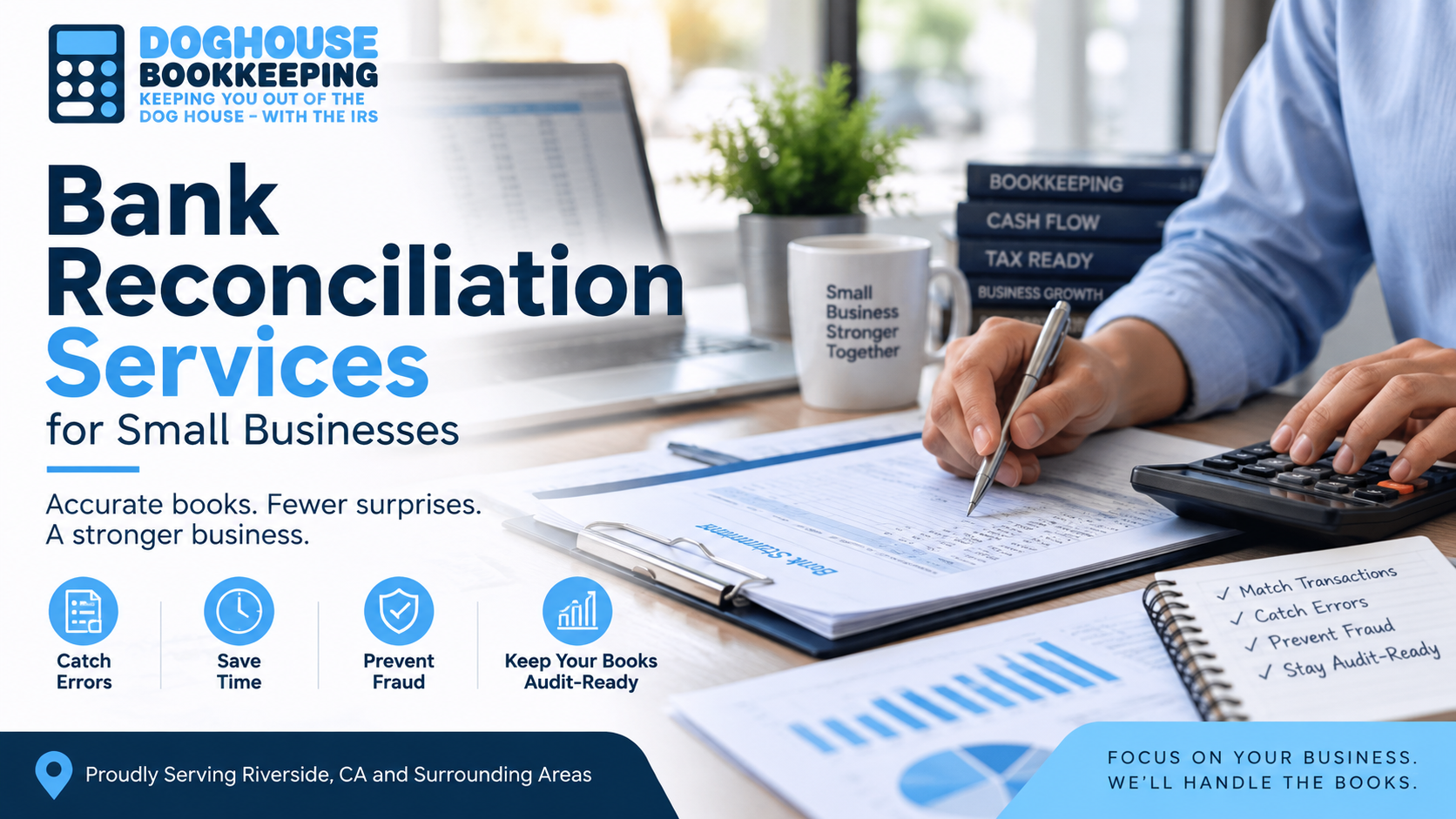
Bank reconciliation services compare your bank and credit card statements against your internal bookkeeping records each month to catch missing deposits, duplicate charges, bank errors, and fraud before they become bigger problems. For small businesses, reconciliation is usually bundled into a monthly bookkeeping service and priced based on transaction volume and number of accounts, rather than a flat rate.
If you've ever opened your bank statement at the end of the month and found a charge you don't recognise, a deposit that never showed up in your books, or a balance that just doesn't add up, you already understand why bank reconciliation matters. It's one of the most overlooked parts of running a small business, and one of the easiest to fall behind on.
At Dog House Bookkeeping, we provide bank reconciliation services for small businesses throughout Riverside, CA and the surrounding Inland Empire. This article walks through what bank reconciliation actually involves, why it matters more than most owners realise, and how to know when it's time to bring in professional help.
What Bank Reconciliation Services Include for Small Businesses
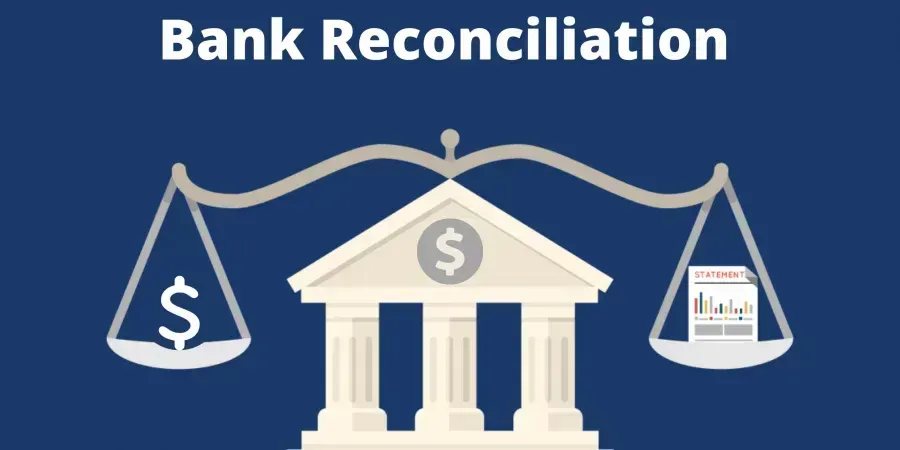
Bank reconciliation is the process of matching every transaction in your bank and credit card accounts against what's recorded in your bookkeeping system - QuickBooks, Xero, Wave, or whatever you use. When the two don't match, someone has to figure out why.
A professional bank reconciliation service typically covers:
- Transaction matching - confirming every deposit, withdrawal, and transfer in your bank feed has a matching entry in your books
- Error correction - fixing duplicate entries, missed transactions, and miscategorised charges
- Bank fee identification - flagging fees, interest charges, or unexpected charges that often go unnoticed until they've added up
- Fraud and unauthorised charge detection - catching charges that don't belong on the account before they become a bigger issue
- Outstanding item tracking - keeping tabs on checks that haven't cleared and deposits still in transit
This is different from basic data entry. Reconciliation is a verification step - it confirms that what your books say about your business is actually true.
Why Monthly Bank Reconciliation Matters
A lot of small business owners treat reconciliation as a once-a-year, tax-season task. The problem with that approach is that small errors compound. A missed transaction in January is easy to fix in February. By November, it's tangled up with eleven more months of activity, and finding it takes real time.
Monthly bank reconciliation matters because it:
- Keeps your financial reports accurate throughout the year, not just at tax time
- Gives you a real-time picture of cash flow instead of a stale one
- Makes it far easier to catch bank errors or fraud while there's still time to dispute them
- Prevents small mistakes from snowballing into a full bookkeeping cleanup project
- Builds a clean paper trail if you ever need financing, a loan, or an audit
If you're deciding how often your business needs financial visibility at all, our post on monthly vs. quarterly financial reporting walks through how to make that call.
If your bank accounts haven't been reconciled this month, schedule a free consultation with our Riverside team before it turns into a bigger cleanup project.
Bank Reconciliation Requirements for California Small Businesses
California doesn't impose a separate legal reconciliation requirement beyond standard federal recordkeeping expectations, but state-specific factors make regular reconciliation especially important for businesses operating here:
- Sales tax accuracy - California's sales tax reporting depends on clean, reconciled records of income and refunds, since discrepancies can trigger closer scrutiny during a California Department of Tax and Fee Administration (CDTFA) review
- Payroll compliance - California has some of the strictest payroll and wage record-keeping rules in the country, and reconciled bank records make it far easier to prove payroll was processed and paid correctly
- Local business license renewals - many Riverside-area cities ask for basic financial documentation during license renewal, and reconciled books make that a non-event instead of a scramble
- Higher audit exposure - California small businesses are statistically more likely to face a state-level audit than businesses in many other states, and reconciled monthly records are your first line of defence
For a California small business, "reconciled" isn't just an accounting nicety - it's the difference between confidently answering a state inquiry and scrambling through a shoebox of receipts.
Reconciling Bank and Credit Card Accounts Together
Most small businesses don't operate out of a single bank account. Between a primary checking account, a savings account, and one or more business credit cards, transactions can get scattered across statements that never quite line up with each other.
Bank and credit card reconciliation done together - rather than separately - matters because:
- Credit card rewards, cashback, and statement credits need to be categorised correctly, or your expense totals will be overstated
- Payments made from a bank account to a credit card balance have to be reconciled on both sides, or you risk double-counting the expense
- Split payments (part cash, part card) are one of the most common sources of reconciliation errors for small businesses
- A consistent monthly process across every account gives you one accurate picture of cash position, instead of several conflicting ones
If your bookkeeping only reconciles your checking account and treats the credit card as an afterthought, there's a good chance your expense reports aren't telling the full story.
Warning Signs Your Bank Reconciliation Needs Professional Help
Some signs are more obvious than others. If any of the following sound familiar, it's worth having a professional take a look:
- You can't remember the last time your accounts were reconciled - if it's been more than a month, you're already behind
- Your bank balance and your bookkeeping balance don't match, and you're not sure why
- You're finding bank fees or charges you don't recognise during a casual scroll through your statement
- Reconciliation is taking hours every month instead of being a routine task
- You're preparing for a loan, audit, or sale and need your books to hold up under scrutiny
- You've gone months (or longer) without reconciling, and the idea of catching up feels overwhelming
That last one is more common than most business owners expect, and it's fixable. We've helped clients catch up a full year of overdue reconciliation and bookkeeping in a matter of weeks, not months.
Not sure where your books actually stand? Contact us for a free review - there's no judgment, just a clear plan to get current.
How Our Bank Reconciliation Process Works
At Dog House Bookkeeping, reconciliation isn't a one-time cleanup - it's a standing part of our monthly bookkeeping services. Our process includes:
- Secure account access - we connect to your bank feeds and credit card statements through the software you already use
- Line-by-line matching - every transaction is checked against your books, not just spot-checked
- Discrepancy resolution - anything that doesn't match gets investigated and corrected the same month, not left for later
- Monthly reporting - you receive a reconciled Profit & Loss statement, balance sheet, and cash flow summary reflecting accurate numbers
- Ongoing communication - if something looks off (a duplicate charge, a bank error, a possible fraud flag), we tell you right away instead of burying it in a report
Get Your Books Reconciled and Accurate Every Month
Bank reconciliation isn't glamorous, but it's the foundation everything else in your books is built on. Without it, your financial reports, tax filings, and business decisions are all resting on numbers you can't fully trust.
Dog House Bookkeeping provides monthly bank reconciliation and full-service bookkeeping for small businesses throughout Riverside, Corona, Moreno Valley, and the greater Inland Empire. Our certified bookkeeping team works with the software you already use and communicates in plain language - no accounting jargon required.
Schedule your free consultation today and find out exactly where your books stand.
Frequently Asked Questions
How much do bank reconciliation services cost for a small business?
Pricing depends on your transaction volume, number of accounts, and overall bookkeeping complexity. Most small businesses have reconciliation included as part of a broader monthly bookkeeping package rather than paying for it as a standalone service. Contact us for pricing based on your specific situation.
How often should a small business reconcile its bank accounts?
Monthly, at minimum. Businesses with high transaction volume- e-commerce, restaurants, or contractors managing multiple job accounts - often benefit from more frequent reconciliation to catch issues before they compound.
What's the difference between bank reconciliation and bookkeeping?
Bookkeeping is the broader process of recording and categorising all of your business's financial transactions. Bank reconciliation is one specific part of that process - verifying that your recorded transactions match what actually happened in your bank and credit card accounts.
Can bank reconciliation help catch up on overdue books?
Yes. Reconciliation is usually one of the first steps in a bookkeeping cleanup project, since it establishes an accurate baseline before the rest of your records can be trusted.
Do I need QuickBooks or Xero for bank reconciliation?
No specific software is required, though most bookkeeping services (including ours) work most efficiently with QuickBooks Online, QuickBooks Desktop, Xero, Wave, or FreshBooks. If you're not currently using accounting software, we can help you choose and set one up.
Is bank reconciliation required before filing taxes?
It's not a legal requirement, but it's strongly recommended. Reconciled books ensure your reported income and expenses match your actual bank activity, which reduces the risk of errors - or red flags - on your tax return.