California Bank Reconciliation Requirements for Small Businesses
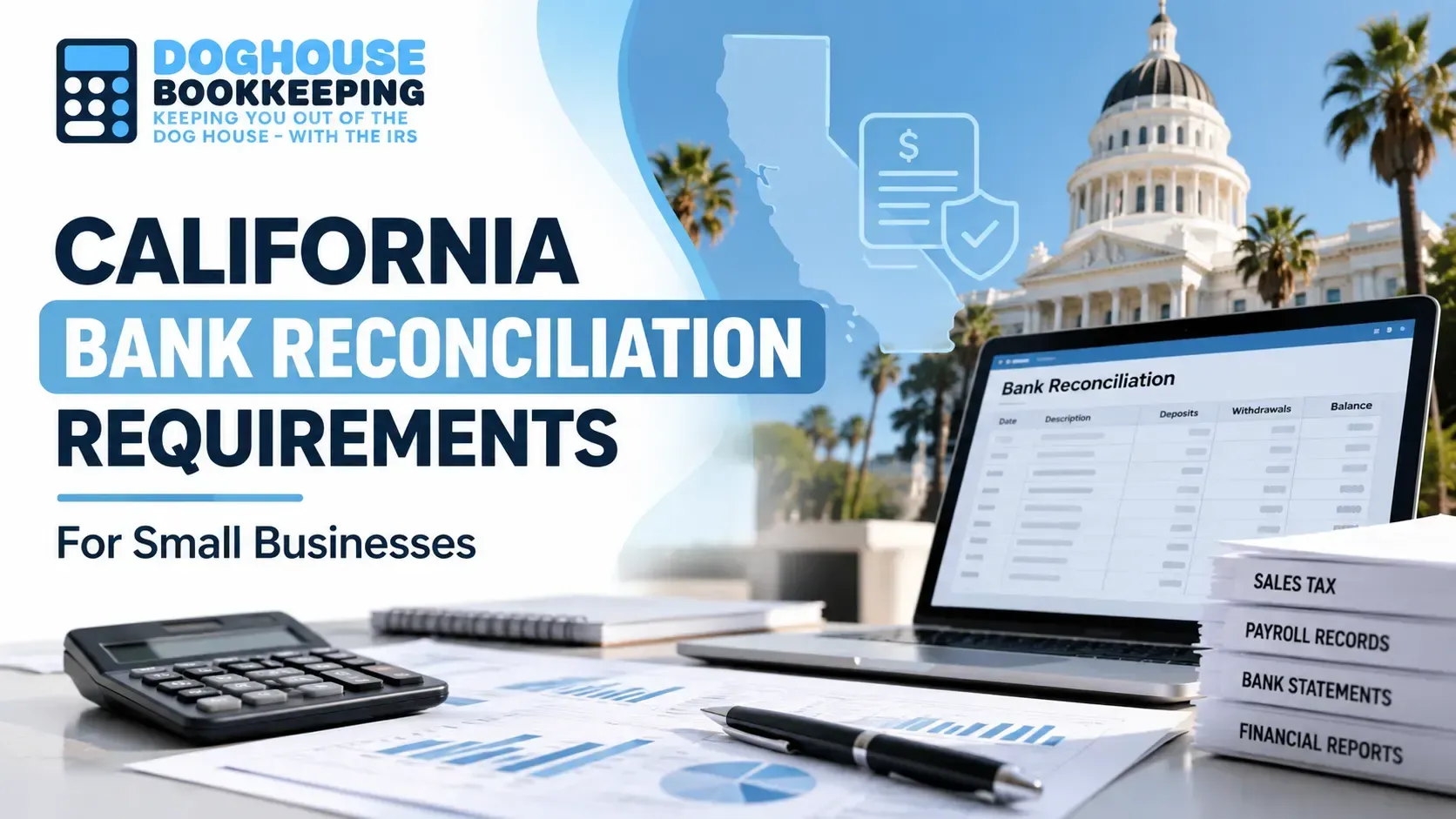
California has no law that specifically requires bank reconciliation. It does require accurate, verifiable financial records for sales tax through the California Department of Tax and Fee Administration (CDTFA) and for payroll under the California Labor Code. Regular reconciliation helps businesses verify that their bookkeeping records match their bank and credit card activity, making it easier to spot discrepancies and support their financial records, which is why most California bookkeepers treat monthly reconciliation as a practical necessity rather than an optional extra.
If you've searched for whether California requires
bank reconciliation, the honest answer is: not directly. But several California recordkeeping laws are much harder to comply with if your books aren't reconciled, and the businesses that skip it are usually the ones caught when a sales tax notice or wage claim shows up.
This post breaks down what California actually requires, where reconciliation fits in, and how often your business should be doing it. For a broader look at what reconciliation involves, see our
overview of bank reconciliation services.
Does California Require Bank Reconciliation for Small Businesses
No California statute says "you must reconcile your bank account every month." What California law does require is that certain financial records be accurate, complete, and available if a state agency asks for them. Bank reconciliation is simply the process that makes that possible.
Think of it this way: During a review, agencies may examine a business's books, payroll records, and other supporting documentation to verify reported amounts. If they don't, you have to explain every unreconciled discrepancy, often months or years after the fact.
California Sales Tax Recordkeeping and CDTFA Requirements
If your business holds a California seller's permit, CDTFA requires you to keep business records that verify you've correctly reported and paid sales and use tax. According to CDTFA Publication 116, those records need to show your business income and expenses, along with the invoices, receipts, and purchase orders used to prepare your sales and use tax returns, and they must be kept for at least four years.
Here's where reconciliation matters directly: if CDTFA audits your account and finds your records aren't adequate, they're permitted to use standard accounting methods to estimate how much tax you should have paid an estimate that rarely works in your favor. Inadequate records can also result in a negligence penalty on top of any tax owed.
Reconciled bank records are the clearest evidence you can offer that your reported sales, deductions, and use tax actually match what happened in your accounts. Without that reconciliation, you're asking an auditor to take your reported numbers on faith.
Not sure if your sales tax records would hold up under a CDTFA review? Talk to our team about a reconciliation and recordkeeping check-up.
California Payroll Recordkeeping Requirements
If you have employees, California Labor Code Section 1174 requires you to maintain payroll records for at least three years, including each employee's hours worked, wages paid, pay rates, and meal and rest period documentation. These records need to be kept at a central location and made available to the Division of Labor Standards Enforcement on request.
This is another area where reconciliation quietly matters. If your payroll records say you paid a certain amount in wages during a pay period, but your bank records show something different, that discrepancy is exactly the kind of thing a wage claim investigation or payroll audit will flag. Reconciling your payroll bank transfers against your payroll records each month closes that gap before it becomes a problem rather than during a dispute with a former employee, which is a much worse time to discover it.
How Reconciled Bank Records Help During a California Audit
Most small businesses don't think about audit readiness until they're facing one. By then, it's too late to go back and reconcile a year or several years of transactions under time pressure.
Reconciled records help with a California audit (sales tax, payroll, or otherwise) because they:
- Give you a documented, transaction-by-transaction trail instead of a reconstructed one
- Reduce the chance an auditor's own estimate replaces your reported numbers
- Make it easy to quickly produce records for the specific period being reviewed
- Show a consistent pattern of good-faith recordkeeping, which matters when penalties are being considered
If your business hasn't been reconciled in a while, bookkeeping cleanup and catch-up is usually the fastest way to get back to a defensible position before it's needed for an actual audit.
How Often California Small Businesses Should Reconcile Bank Accounts
Monthly, at minimum. California's sales tax filing frequency (monthly, quarterly, or annually, depending on your reported liability) is a reasonable floor, but businesses that only reconcile at filing time tend to accumulate the same small errors reconciliation is supposed to catch.
Businesses with higher transaction volume tail, such as restaurants, e-commerce, or contractors managing multiple job accounts, often benefit from reconciling more frequently than monthly, simply because there's more room for something to slip through unnoticed.
Want reconciliation handled on a predictable monthly schedule instead of thinking about it yourself? Schedule a free consultation with our Riverside-based team.
Frequently Asked Questions
Is bank reconciliation legally required in California?
Not directly. There's no California statute requiring bank reconciliation specifically. However, California's sales tax and payroll recordkeeping laws require accurate, verifiable records, which are much harder to maintain without regular reconciliation.
How long does California require businesses to keep financial records?
CDTFA requires sales and use tax records to be kept for at least four years. Payroll records must be kept for at least three years under Labor Code Section 1174. If you're actively being audited, records covering the audit period should be kept until the audit is complete, even if that's longer than the standard retention period.
What happens if my sales tax records don't match my bank statements?
If CDTFA audits your business and finds your records inadequate to verify your reported tax, they can use standard accounting methods to estimate your tax liability, and a negligence penalty may apply. Reconciled bank records are the clearest way to avoid that outcome.
Do payroll records need to match bank statements in California?
There's no statute that says so explicitly, but in practice, a mismatch between payroll records and payroll-related bank transfers is exactly the kind of discrepancy a wage claim investigation or payroll audit is designed to catch.
How often should a California small business reconcile its books?
Monthly, at a minimum. Businesses with high transaction volume often benefit from more frequent reconciliation to catch discrepancies before they compound.