
How to Catch Up on Overdue Bank Reconciliation
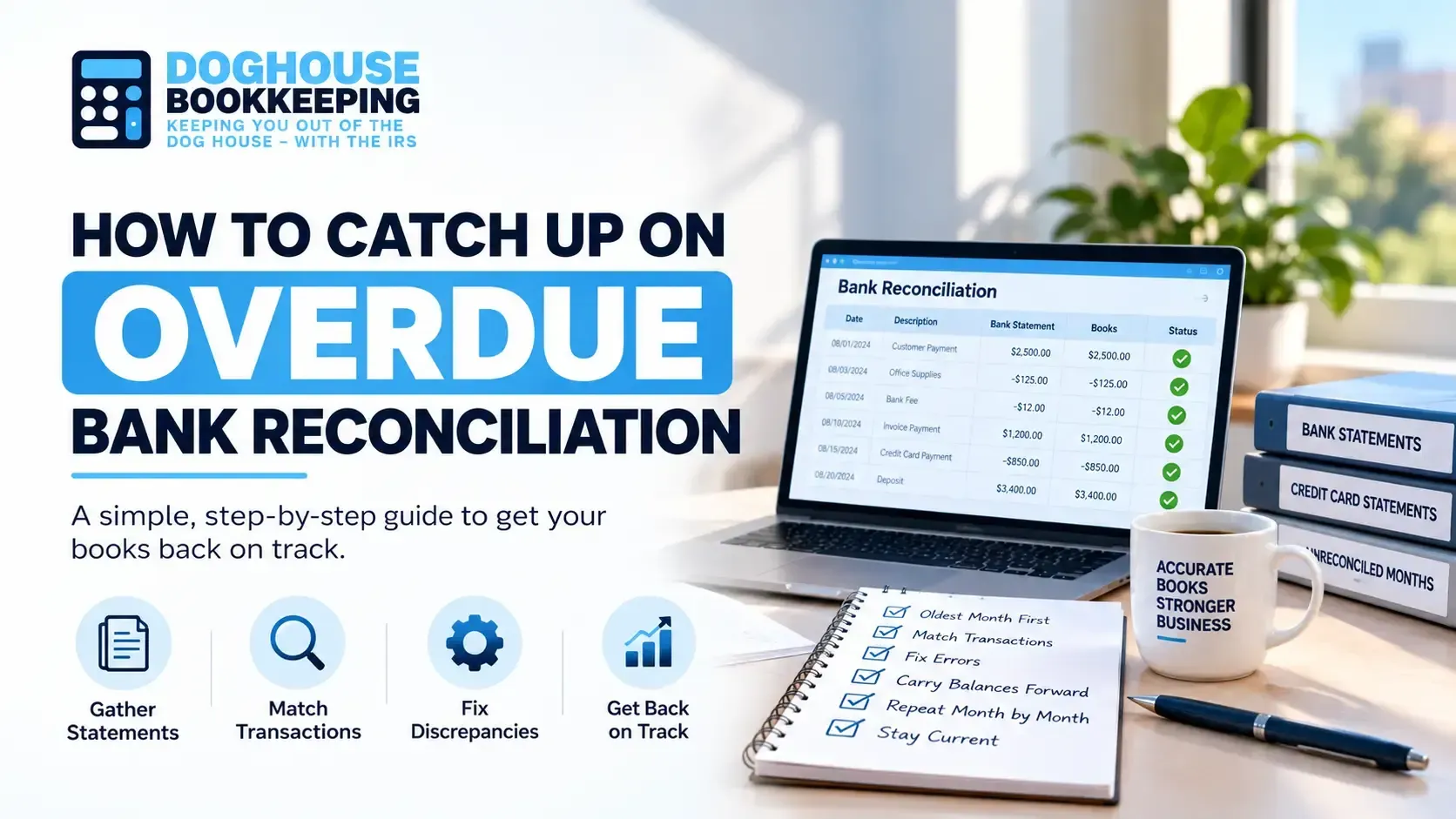
Catching up on overdue bank reconciliation means working backward through each unreconciled month, starting with the oldest, until your bookkeeping records match your actual bank and credit card statements again. It's handled one month at a time rather than all at once. For most small businesses, even a full year of overdue reconciliation can often be brought current within a few weeks of focused work, depending on transaction volume and the condition of the existing books.
If your bank reconciliation has fallen behind by a month, a few months, or longer, you're not alone, and it's a fixable problem, not a permanent one. At Dog House Bookkeeping, catching up overdue clients is one of the most common reasons business owners reach out, which is why bookkeeping cleanup is one of our most requested services.
This article breaks down exactly how a professional catch-up works, how far back you actually need to go, and when it's worth bringing in bank reconciliation services instead of trying to power through months of statements on your own as part of your regular monthly bookkeeping routine.
Signs Your Bank Reconciliation Has Fallen Behind
A few common signs it's time to catch up rather than keep pushing it off:
- You can't remember the last time your bank balance and your books actually matched
- Statements are piling up unopened, physically or in your inbox
- You've started avoiding your bookkeeping software altogether
- A loan application, tax filing, or audit request is forcing the issue
None of these mean something has gone seriously wrong. They just mean it's time to stop and catch up before another month gets added to the pile.
How to Catch Up on Overdue Bank Reconciliation Step by Step
A proper catch-up follows a specific order; skipping around is what makes these projects take longer than they need to:
- Gather every missing statement first: bank accounts, savings, and credit cards, for every unreconciled month
- Start with the oldest unreconciled month, not the most recent one. Errors compound forward, so fixing the earliest month first prevents the same mistake from repeating in every month after it.
- Fully reconcile that one month before touching the next, matching transactions, correcting entries, and confirming the ending balance.
- Carry the corrected balance forward into the next month as the new starting point.
- Repeat month by month until you reach the present.
- Resume normal monthly reconciliation immediately once you're caught up, so you don't end up back in the same position.
Trying to reconcile everything at once instead of working month by month can make catch-up projects much harder to manage and increase the risk of overlooking errors.
How Far Back You Should Go When Catching Up
How far back to go depends mostly on why you're catching up in the first place. If it's for tax preparation, you'll generally need the full tax year reconciled. For a loan or financing application, a lender may request recent financial statements or a specific period of financial history, often including the trailing 12 months. Requirements vary by lender and application. If you're just trying to get current for your own peace of mind, going back to the last point your books were known to be accurate is usually enough; you don't always need to reconcile years of history to move forward confidently.
Not sure how far back your situation actually requires? Talk to our team, and we'll tell you exactly what's needed before any work starts.
Common Mistakes When Catching Up on Reconciliation
- Reconciling everything at once instead of working through months sequentially
- Starting with the most recent month and leaving the oldest errors buried underneath
- Matching bank balances without correcting the underlying bookkeeping entries that caused the mismatch in the first place
- Rushing through without carrying corrected balances forward, which just creates a new round of discrepancies
- Giving up partway through and leaving the books in a worse, half-reconciled state than before
How Long a Bank Reconciliation Catch Up Takes
Timing depends heavily on transaction volume and how many months are involved, but most small businesses are surprised by how fast it actually goes once someone experienced is working through it systematically. A single overdue quarter is often a matter of days. The time required depends on transaction volume, the number of accounts, and the condition of the existing books. A single overdue quarter may take a few days to resolve, while a full year of unreconciled activity can take several weeks when multiple accounts or significant discrepancies are involved.
Frequently Asked Questions
How many months of bank reconciliation can realistically be caught up at once?
There's no hard limit; the process is the same whether it's two months or two years, just repeated more times. The main factor is transaction volume, not calendar time.
Should I reconcile the oldest month first?
Yes. Starting with the oldest unreconciled month generally makes the catch-up process easier because each completed month establishes the correct ending balance for the following month.
Will catching up on reconciliation trigger an audit?
No. Catching up on overdue reconciliation is a normal bookkeeping activity and does not itself trigger an audit. Bringing your books up to date can help ensure your financial records are accurate and properly supported if your business is later reviewed.
Can I catch up on reconciliation myself?
Yes, for a short gap of a month or two. Once you're several months or a year behind, the time required to do it correctly and the risk of missing underlying errors rather than just matching balances usually makes professional help worth it.
What happens after you're caught up?
Ideally, nothing dramatic; you simply resume monthly reconciliation going forward so you never fall this far behind again. If you want a refresher on what that ongoing process actually looks like, see what monthly bank reconciliation involves.
Get Caught Up Without the Dread
Dog House Bookkeeping helps small businesses in Riverside, Corona, Moreno Valley, and surrounding areas get overdue bank reconciliations back on track and establish a consistent monthly process going forward.
Dog House Bookkeeping helps small businesses in Riverside, Corona, Moreno Valley, and surrounding areas catch up on overdue bank reconciliations using the bookkeeping software they already rely on.
Schedule a free consultation, and we'll tell you exactly how far behind you are and what it'll take to get current.