A step-by-step guide to bank reconciliation for small businesses
Your bank app says $12,400. Your books say $13,330. Payroll goes out in the morning, and $930 has gone missing. Sound familiar?
It hasn't actually disappeared. It is hiding in four places, and nearly every small business has the same four hiding spots. In this post, you will learn how to find them with a simple seven-step process, and you will see exactly where that $930 went.
What Is Bank Reconciliation and Why Does It Matter?
Bank reconciliation is the process of comparing your bank statement with your own accounting records to confirm that the two agree. Every difference has a reason, such as a timing gap, a bank fee, or a mistake.
Finding that reason keeps your books accurate, helps you catch fraud early, and shows your true cash position. It is also the foundation of every bank reconciliation service a bookkeeper provides, because reports and tax records are only as reliable as this step.
What You Need Before You Start
A little preparation makes the process faster. Have these items ready:
- The bank statement for the month
- Your accounting software, such as QuickBooks, Xero, or Wave
- Last month's completed reconciliation report
- About one hour without interruptions
How to Do a Bank Reconciliation in 7 Steps
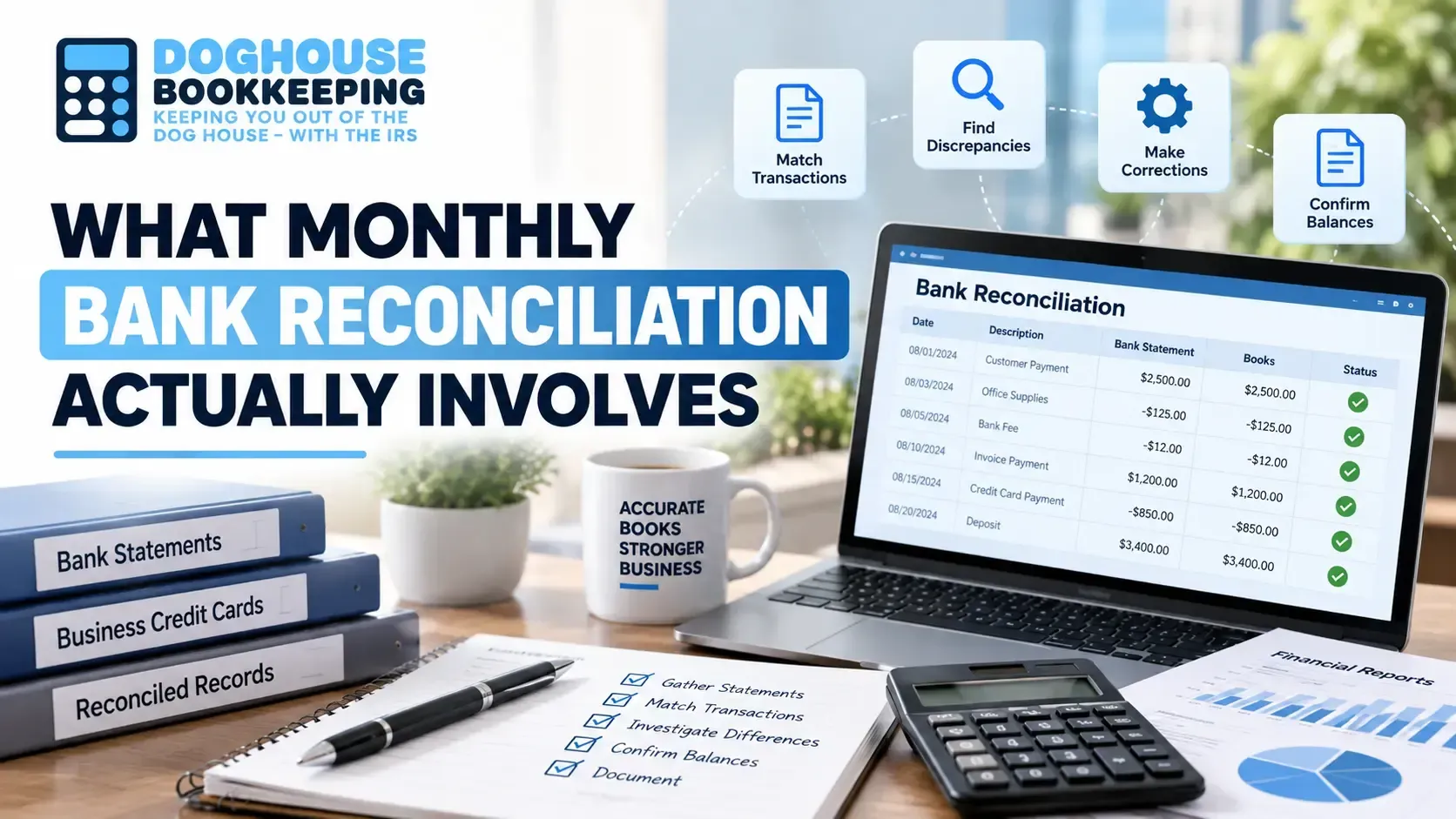
Work through these seven steps in order.
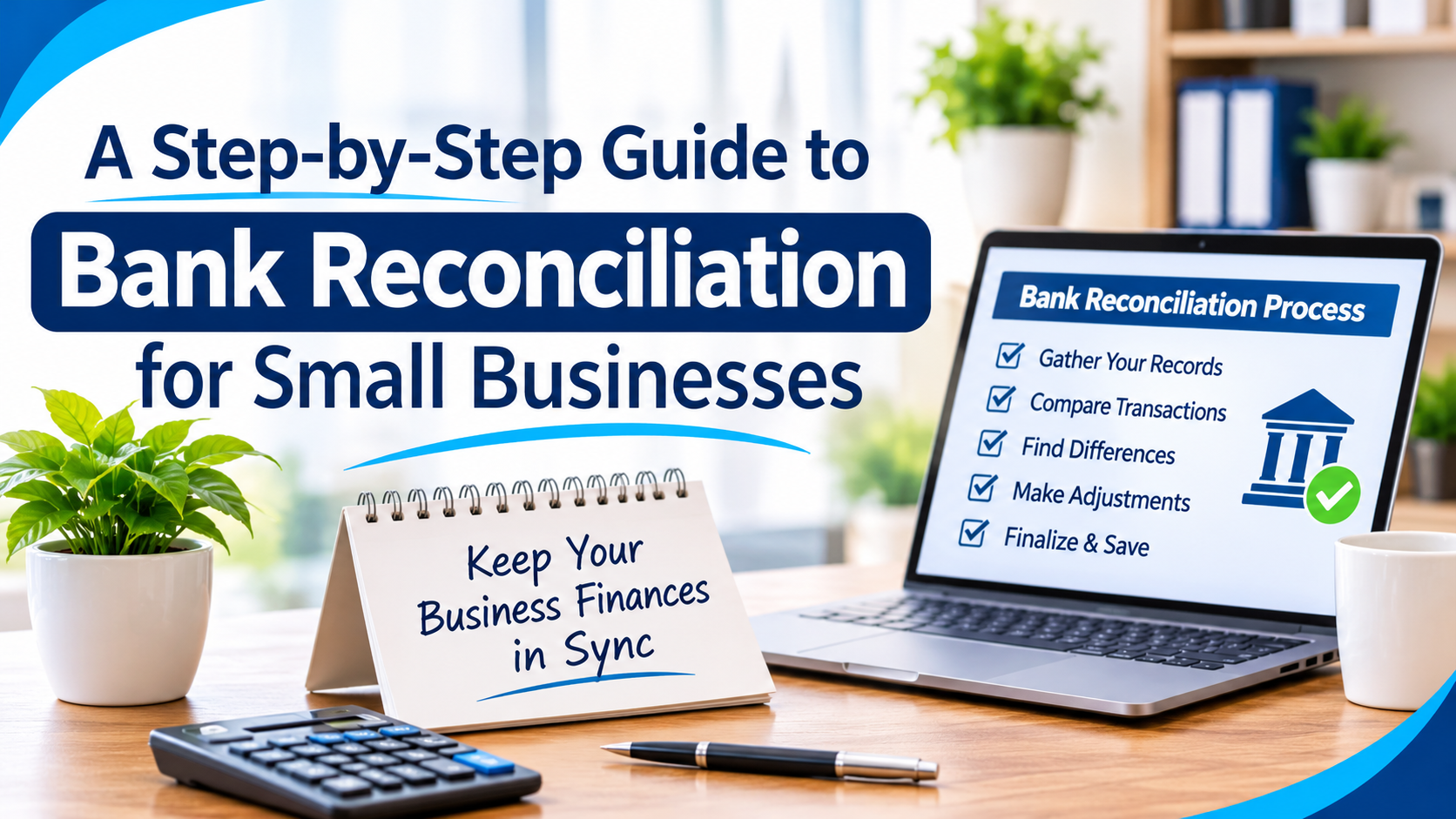
- Gather your records. Collect the statement, your books, and last month's reconciliation.
- Check the starting balance. It should equal last month's ending balance. If it doesn't, something in a closed period was changed.
- Match deposits and withdrawals. Tick off each transaction on the statement against your books, line by line.
- List timing differences. Deposits in transit and outstanding checks appear in your books but not yet on the statement. They are not errors.
- Record bank-only items. Fees, interest, returned (NSF) checks, and automatic debits often show up on the statement first. Add them to your books.
- Investigate what is left. Look for duplicates, transposed numbers, wrong dates, and missing entries. Fix real errors instead of forcing a match.
- Compare the adjusted balances. Adjusted bank balance equals the statement balance plus deposits in transit, minus outstanding checks. Adjusted book balance equals your book balance after bank-only items. The two must match. Then save the report.
What a Completed Bank Reconciliation Report Includes
A finished bank reconciliation report shows that your bank statement and your books agree, and it documents every adjustment made to get there. A complete report includes:
- Statement ending balance: the closing balance from your bank statement.
- Deposits in transit: deposits recorded in your books that have not yet cleared the bank.
- Outstanding checks: checks you have written that have not yet been cashed.
- Adjusted bank balance: the statement balance after timing differences.
- Bank-only adjustments: fees, interest, returned (NSF) checks, and automatic debits added to your books.
- Corrected errors: duplicates, transposed numbers, and wrong dates that were fixed.
- Adjusted book balance: your book balance after all adjustments. It must equal the adjusted bank balance.
- Preparer sign-off and date: a record of who reconciled the account and when.
Nearly every difference between a bank balance and a book balance comes from one of four sources: a deposit in transit, an outstanding check, a bank-only item, or an entry error. Once each difference is assigned to one of these, the account is reconciled.
Why Your Bank Reconciliation Won't Balance
If the adjusted balances still differ, work through this checklist:
- The starting balance is off. A change to a closed month throws off every month after it.
- Two digits are swapped. If the difference divides evenly by 9, you may have entered 540 as 450.
- A duplicate entry. Bank feed re-syncs often create double entries.
- A missed bank-only item. Check fees, interest, and automatic payments.
- The wrong date or period. A transaction posted in the wrong month looks missing.
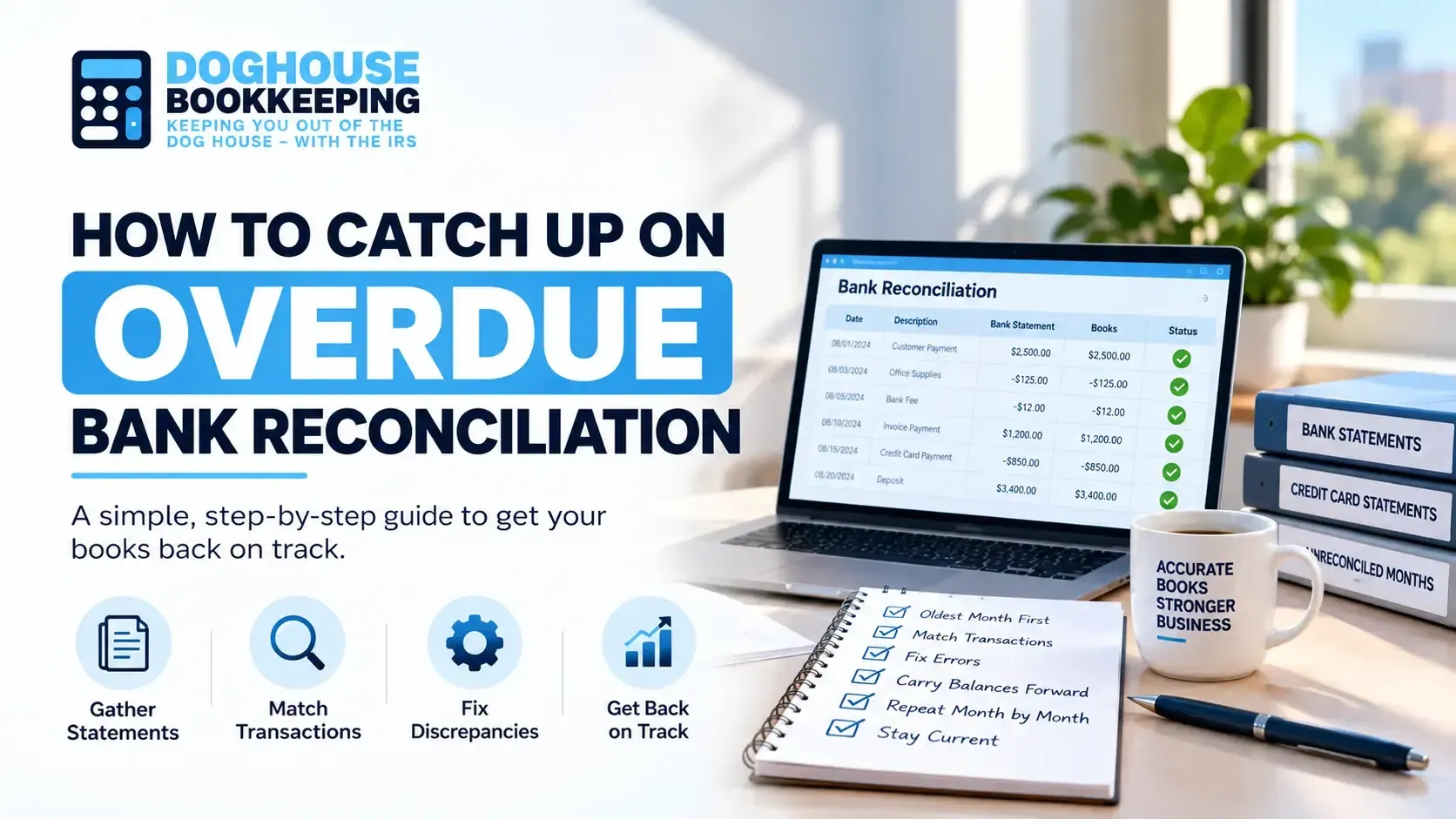
Never add a plug entry just to make the numbers agree. If you are months behind, you can catch up on overdue bank reconciliation one month at a time.
Why Monthly Bank Reconciliation Beats Doing It Once a Year
Many owners reconcile once a year, right before taxes. That turns a one-hour task into a weekend of detective work. Monthly bank reconciliation keeps each period small, so a mistake is easy to trace while the details are fresh. It also lets you spot an unauthorized charge within days, while you can still dispute it with your bank.
Reconciling Credit Cards and Multiple Accounts
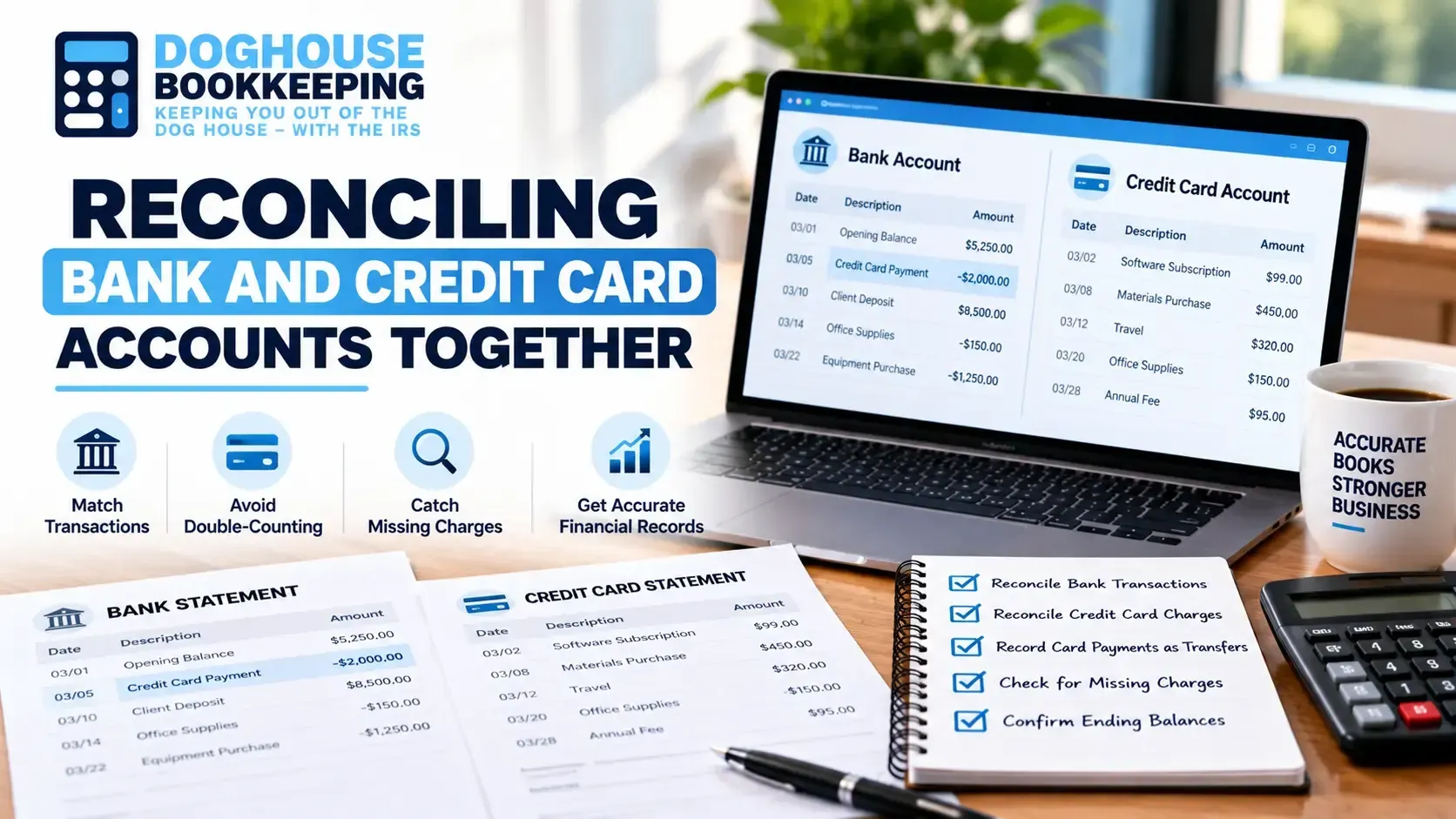
The same steps apply to every business credit card, savings account, and payment processor. Reconcile each account separately. Then confirm that transfers between accounts are recorded once, as transfers, not as income or expenses. Our post on bank and credit card reconciliation shows how to avoid double-counted card payments.
Bank Reconciliation for Contractors
Contractors have extra steps because money moves in stages. Progress payments, retainage, subcontractor checks, and materials bought on several cards all need to land on the right job. A balance that matches the bank can still hide a deposit posted to the wrong project. That is why bank reconciliation services for contractors tie each transaction to a job, not just to an account.
Tips to Make Bank Reconciliation Faster
- Turn on bank feeds. Transactions flow into your software automatically, so you only review them.
- Pick a fixed day. Reconcile on the same day each month, such as the fifth, so it becomes routine.
- Keep receipts organized. A photo of each receipt saves time when you need to identify a charge.
- Separate personal and business spending. Mixed accounts are the biggest cause of confusing differences.
When to Use a Bank Reconciliation Service in Riverside, CA
Doing it yourself works when you have few transactions and the time. A professional makes more sense when:
- You are several months behind
- You manage multiple accounts, cards, or payment processors
- Reconciliation takes hours every month
- A loan, audit, or sale is coming
At Dog House Bookkeeping, we reconcile every account line by line as part of our bank reconciliation services and monthly bookkeeping. Our certified, experienced team works in QuickBooks, Xero, Wave, or FreshBooks and serves Riverside, Corona, Moreno Valley, and the Inland Empire. One client came to us with a year of overdue books, and we had them cleaned up in about two weeks.
Frequently Asked Questions
How do I reconcile a business checking account monthly?
Gather the statement and your books, confirm the starting balance, match every transaction, list timing differences, record bank-only items, fix errors, and compare the adjusted balances. Using the same schedule each month keeps it quick.
How often should a small business reconcile its bank account?
Monthly is the minimum. Businesses with many daily transactions often benefit from weekly checks, because errors are easier to trace while the details are fresh.
Do multiple business bank accounts complicate reconciliation at tax time?
They can. Each account needs its own statement, and transfers between accounts must be recorded as transfers. Reconciling every account monthly means nothing has to be sorted out at tax time.
How do I reconcile multiple business accounts without hours of manual work?
Turn on bank feeds in your accounting software, reconcile every account on one fixed schedule, and review only the exceptions. A bookkeeper can also take this off your plate entirely.
What do bank reconciliation services include?
A bank reconciliation service matches every transaction to your books, resolves differences, corrects errors, and delivers reconciled reports. Most small businesses receive it as part of monthly bookkeeping.
Is bank reconciliation required for small businesses?
There is no separate legal requirement, but you do need accurate records for taxes, lenders, and audits. Regular reconciliation is the most reliable way to keep them accurate.
Can QuickBooks or Xero reconcile my bank account automatically?
They can match many transactions through bank feeds, which saves time. You still need to review the matches, resolve exceptions, and confirm that the final balances agree with your statement.
Get Your Bank Reconciliation Done Right Every Month
Dog House Bookkeeping provides monthly bank reconciliation services and full-service bookkeeping for small businesses and contractors in Riverside, Corona, Moreno Valley, and the greater Inland Empire. Our certified team reconciles every bank account and credit card line by line in QuickBooks, Xero, Wave, or FreshBooks, and explains the results in plain language.
Schedule your free consultation today to learn exactly where your books stand.