Reconciling Bank and Credit Card Accounts Together
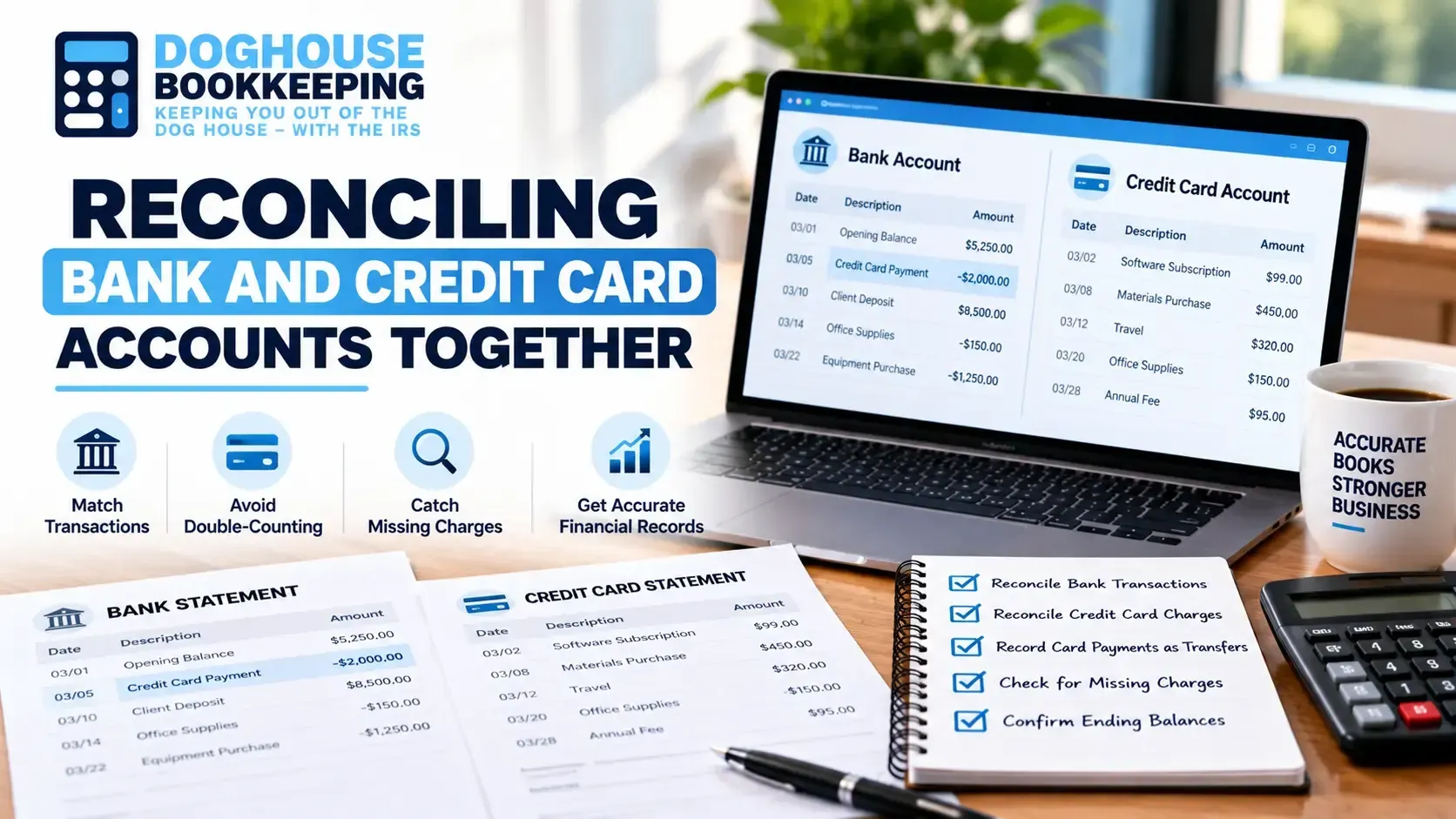
Reconciling bank and credit card accounts together means matching transactions from both accounts against your bookkeeping records and confirming that their balances are accurate. This process helps small businesses catch missing charges, prevent double-counted expenses, and record credit card payments as transfers rather than new expenses.
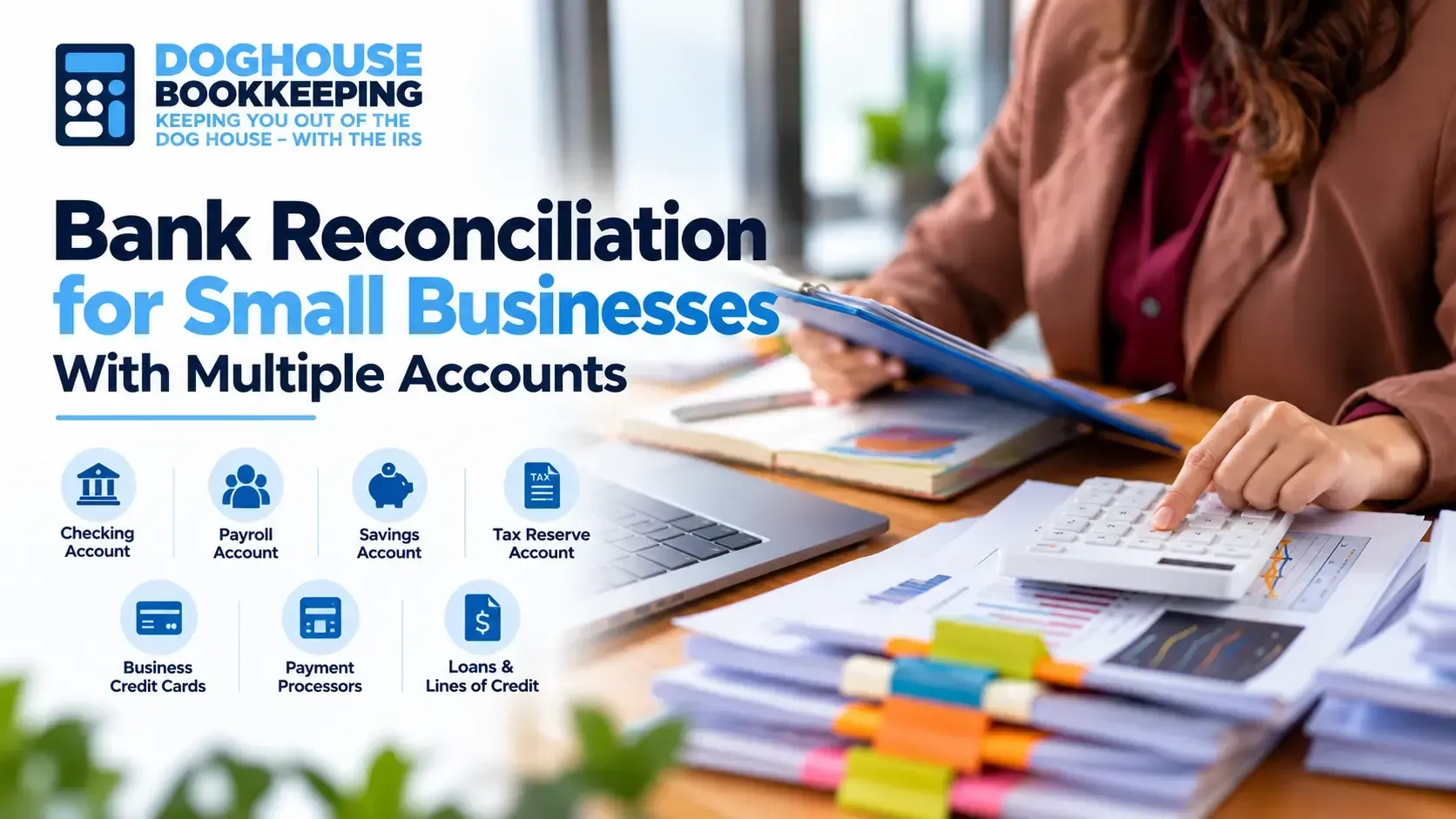
Most small businesses run on more than one account. There's a checking account, maybe a savings account, and one or more business credit cards that absorb everything from software subscriptions to materials runs. Trouble starts when each account runs on its own schedule, or when you ignore the card until tax time. At Dog House Bookkeeping, reconciling every account in one pass is a standard part of our bank reconciliation services for small businesses.
Why Bank and Credit Card Reconciliation Belong Together
Your bank account and your credit card are connected. Every time you pay the card from your checking account, money leaves one account and reduces a balance owed on the other. If those two movements are recorded by different people, at different times, or in different ways, the numbers stop agreeing.
Think of it this way. You buy $500 of supplies on a credit card in March. That's an expense in March. In April, you pay the card bill from your bank account. That payment isn't a new expense. It's a transfer that settles what you already recorded. If both the purchase and the payment get recorded as expenses, your spending looks $500 higher than it really was.
Reconciling the accounts together keeps that relationship visible. You can see the purchase, the payment, and the balance still owed in one view.
What Goes Wrong When Accounts Are Reconciled Separately
When the checking account is reconciled, but the credit card is treated as an afterthought, a few predictable problems show up:
- Double-counted expenses - a purchase recorded from the card statement and again when the card payment clears the bank
- Missing expenses - card charges that never made it into the books because nobody reviewed the statement
- Wrong balance owed - the card liability in your books doesn't match what the card company says you owe
- Distorted profit - inflated or understated expenses make your profit and loss statement unreliable
- Messy tax prep - deductions are missed or overstated when card activity isn't fully captured
None of these look serious in a single month. Over a year, they add up to reports you can't trust.
Wondering whether your card activity is fully captured in your books? Talk to our team, and we'll review a recent statement with you.
How to Reconciling Bank and Credit Card Accounts Together
The process follows the same logic as any reconciliation, with extra attention to where the two accounts meet:
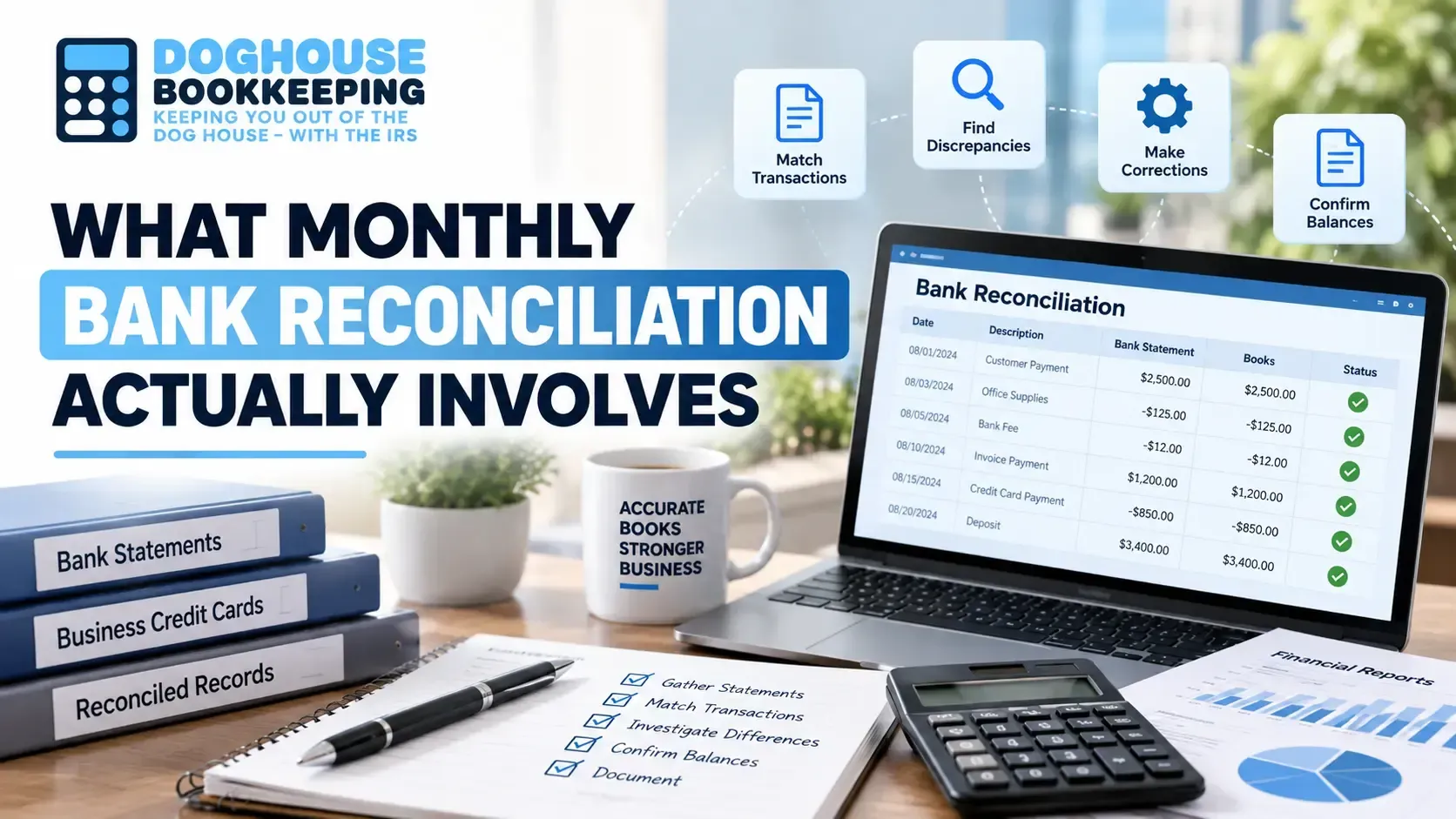
- Gather every statement for the period - checking, savings, and each business credit card
- Confirm starting balances match the ending balances from the prior reconciliation, including the card balance owed
- Match each bank transaction to your books, line by line
- Match each credit card charge to your books the same way, not just the statement total
- Identify card payments in the bank account and confirm they're recorded as payments toward the card balance, not as new expenses.
- Check refunds, credits, and fees on the card statement and make sure each one is recorded.
- Investigate unresolved differences review unmatched transactions, outstanding payments, pending transactions, and statement cutoff dates. Correct bookkeeping errors where necessary and document any legitimate timing differences.
- Resolve anything that doesn't match, then confirm each account's ending balance agrees with its statement
The key step is number five. That's where most double-counting errors are caught.
Common Credit Card Items That Cause Reconciliation Errors
Credit card statements contain entries that don't exist in a checking account, and they're easy to mishandle:
- Rewards and cashback - need to be recorded consistently, either as a reduction of expenses or as other income, depending on how your accountant prefers to treat them
- Annual fees and interest charges - small amounts that rarely get entered unless someone is checking line by line
- Refunds and returns - credits that need to be matched back to the original purchase, not recorded as new income
- Disputed charges - pending and reversed transactions that appear and disappear between statements
- Split payments - a purchase covered partly by card and partly by cash or another account
- Personal charges - spending on a business card that doesn't belong in the business books and needs to be separated
Each of these is a small item on its own. They become a real problem when no one reviews them.
Timing Differences Between Statements
Bank accounts usually report on a calendar month. Credit cards often close on a different day, such as the 15th or the 22nd. That means a single month of activity can span parts of two card statements.
Reconciliation has to account for this. A charge made on the 28th may not appear on a card statement until the following period, but it still belongs to the month it happened. A good process tracks which transactions have posted, which are still pending, and which month each one belongs to, so your monthly reports reflect when the spending actually occurred.
The statement closing date and the transaction date are not always the same. When reviewing your records, use the appropriate statement period and accounting method, and investigate pending or uncleared transactions before adjusting balances. This helps prevent duplicate entries and unnecessary corrections.
Warning Signs Your Accounts Aren't Reconciled Together
- Your credit card balance in your books doesn't match the balance on the statement.
- Expense totals look higher than expected, especially in months with large card payments.
- You find charges on card statements that you can't find in your books
- You reconcile checking every month but haven't looked at the card in a while
- Your accountant or tax preparer keeps asking for card statements
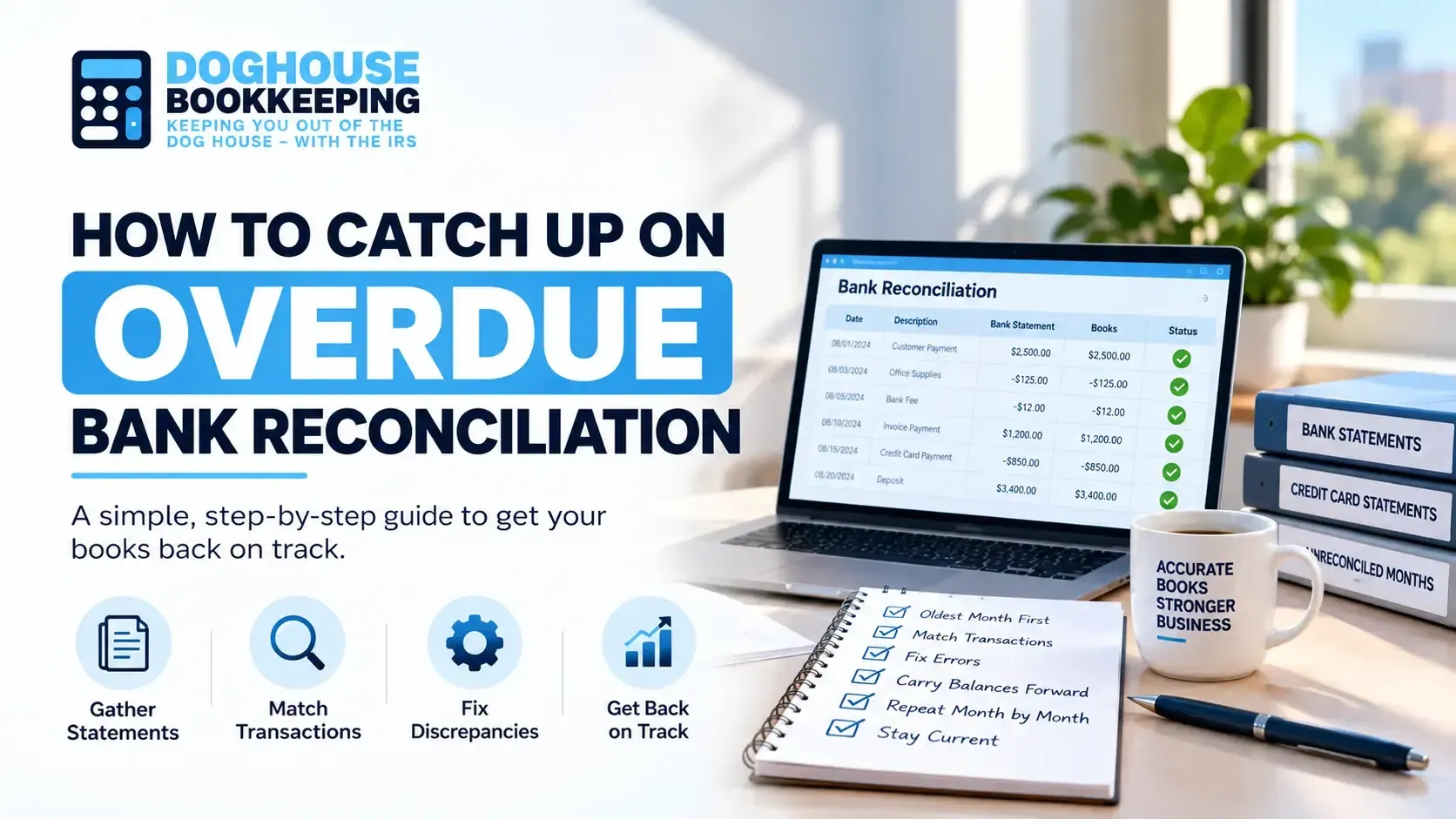
If any of these sound familiar, the accounts are probably drifting apart, and the fix is easier now than after another quarter. If you're already months behind, our bookkeeping cleanup process works month by month until everything agrees again.
Frequently Asked Questions
Should a credit card payment be recorded as an expense?
No. If the credit card purchases have already been recorded, the payment from your bank account should generally be recorded as a transfer that reduces your credit card liability. Recording the payment as another expense can double-count your spending.
How often should business credit cards be reconciled?
Monthly, at minimum, using the same schedule as your bank accounts. Businesses with heavy card usage often benefit from a quick mid-month review so unfamiliar charges are caught while they can still be disputed.
Do I need to reconcile a credit card I only use occasionally?
Yes. Even a lightly used card can carry fees, interest, or recurring subscriptions that are easy to miss, and any balance owed belongs on your books.
What if I mix personal and business spending on one card?
It's best to separate them going forward, but if it has already happened, the personal charges need to be identified and removed from the business expenses during reconciliation. Cleaning this up as you go is far easier than sorting through a year of statements later.
Can bank and credit card reconciliation be automated?
Software like QuickBooks and Xero can match many transactions automatically through bank feeds, which saves time. It still takes a person to review exceptions, catch transfers recorded as expenses, and confirm the final balances are right.
Get Every Account Agreeing With Your Books
Accurate bookkeeping depends on every account telling the same story. Reconciling your bank and business credit card accounts each month helps prevent duplicate expenses, identify missing transactions, and maintain more reliable financial reports.
Dog House Bookkeeping provides monthly bank and credit card reconciliation for small businesses in Riverside.
Schedule a consultation to discuss your bookkeeping needs and find out how we can help keep your accounts up to date.