
Do You Need a Bookkeeper or an Accountant for Your Business?

A bookkeeper records and organizes your daily financial transactions, reconciles your accounts, and keeps your books accurate month to month. An accountant interprets those records to handle tax planning, tax filing, and financial advice. Many small businesses benefit from having a bookkeeper maintain accurate financial records before working with an accountant for tax preparation, planning, or financial advice. However, the right starting point depends on the business's current bookkeeping and tax needs.
If you're searching "bookkeeper vs accountant," you're probably staring at a pile of receipts, a bank account that doesn't match your books, or a tax deadline that's getting closer. The two roles sound similar, and plenty of business owners hire the wrong one first. At Dog House Bookkeeping, we explain this difference to new clients constantly, because getting the order right saves money and stress. Our bookkeeping services focus on the first half of that equation.
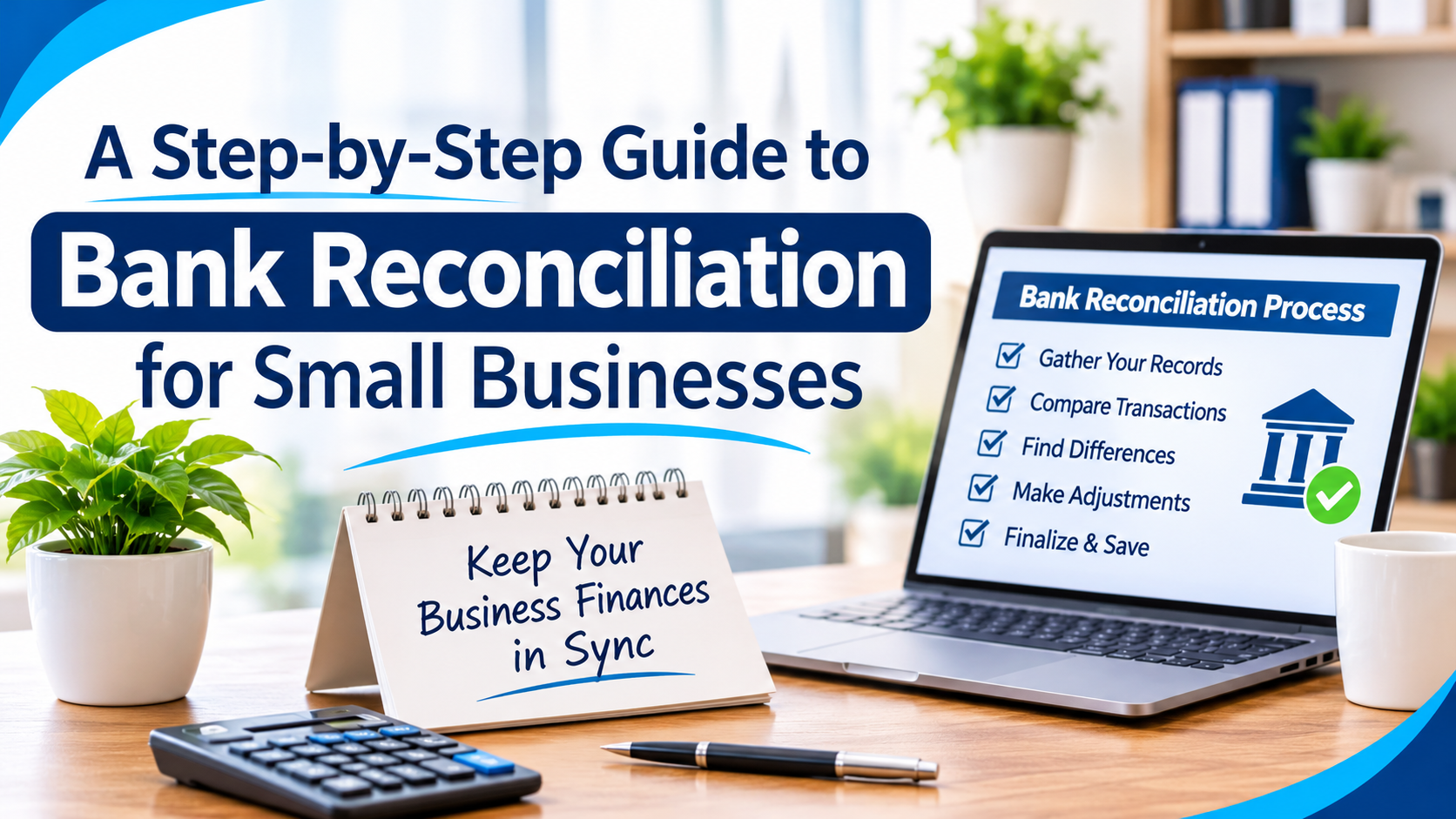
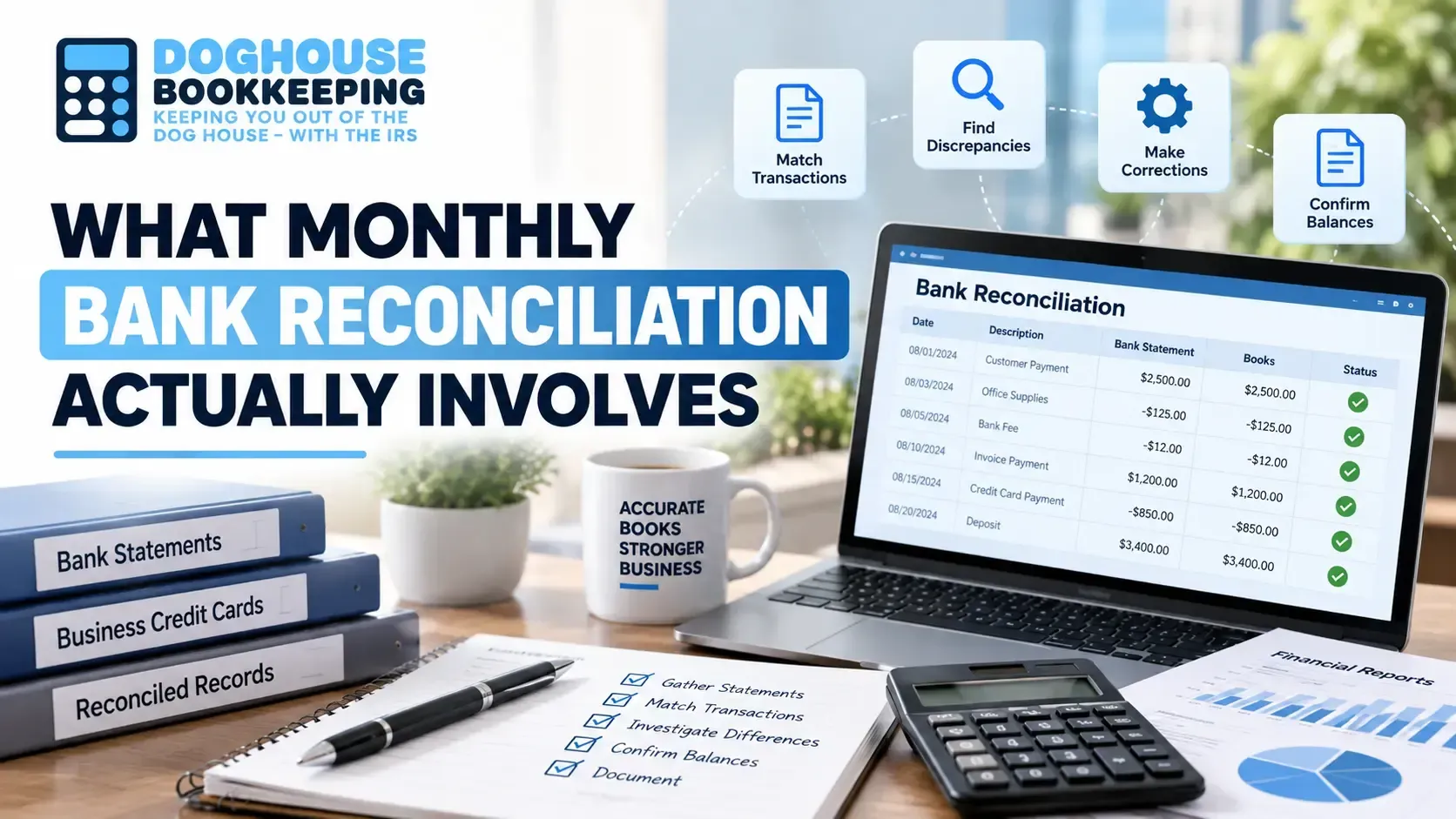
This article breaks down what each professional does, where they overlap, and how to decide which one your business needs right now. Along the way, we'll point to the specific bookkeeping tasks that matter most, starting with bank reconciliation services and the monthly bank reconciliation process that keeps your records trustworthy.
What a Bookkeeper Does
A bookkeeper handles the day-to-day recording of your business's financial activity. Think of it as keeping an accurate diary of every dollar that comes in and goes out. A bookkeeper typically:
- Records and categorizes income and expenses in software like QuickBooks, Xero, Wave, or FreshBooks
- Reconciles bank and credit card statements against your books each month
- Tracks invoices you've sent and bills you owe
- Supports payroll recordkeeping
- Produces monthly reports such as a profit and loss statement and balance sheet
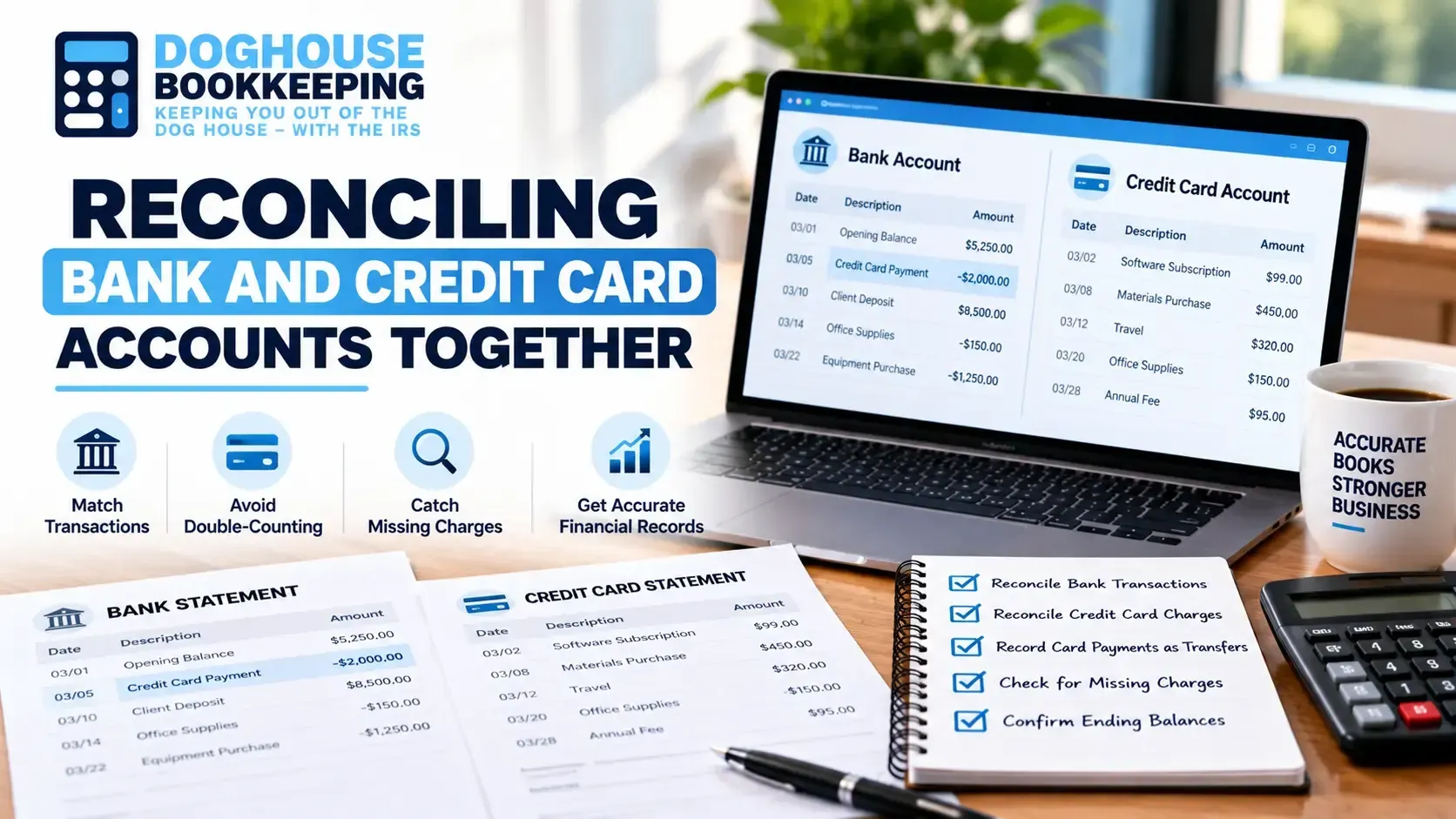
The reconciliation piece deserves special attention. It's the step that confirms your books match reality, and it's where most small business errors get caught. That includes bank and credit card reconciliation done together, and reconciling multiple accounts when your business uses a separate payroll account, savings, or payment processors.
What an Accountant Does
An accountant reviews and interprets financial information to help business owners understand their financial position, meet tax obligations, and make informed decisions. Depending on their qualifications and services, accountants may also provide tax planning, financial analysis, and business advice.
- Prepares and files business and personal tax returns
- Plans ahead to reduce your tax bill legally
- Analyzes your financial statements and spots trends
- Advises on growth decisions, entity structure, and forecasting
- In the case of a CPA, performs audits and other attest work
In California, Certified Public Accountants (CPAs) are licensed and regulated by the California Board of Accountancy. Bookkeeping is generally not a separately licensed profession, although bookkeepers may have professional certifications or specialized training.
Bookkeeper vs Accountant Side by Side
| Comparison | Bookkeeper | Accountant |
|---|---|---|
| Main Job | Records and organizes transactions | Interprets numbers, plans, and files taxes |
| Timing | Ongoing, usually monthly | Periodic, often quarterly or annually |
| Focus | Accuracy and completeness | Strategy and compliance |
| Reconciles Accounts | Yes, every month | Usually relies on the bookkeeper's work |
| Prepares Tax Returns | Generally no | Yes |
| Gives Financial Advice | Limited | Yes |
The simplest way to remember it: the bookkeeper makes sure the numbers are right, and the accountant tells you what the numbers mean.
Which One Does Your Business Need First
For most small businesses, the answer is a bookkeeper. Here's how to tell.
You probably need a bookkeeper first if:
- Your books are behind, or you can't remember the last time they matched your bank
- You're mixing business and personal spending or guessing at your profit
- You have more than a handful of transactions each month
- You want clean records before tax season, a loan application, or a sale
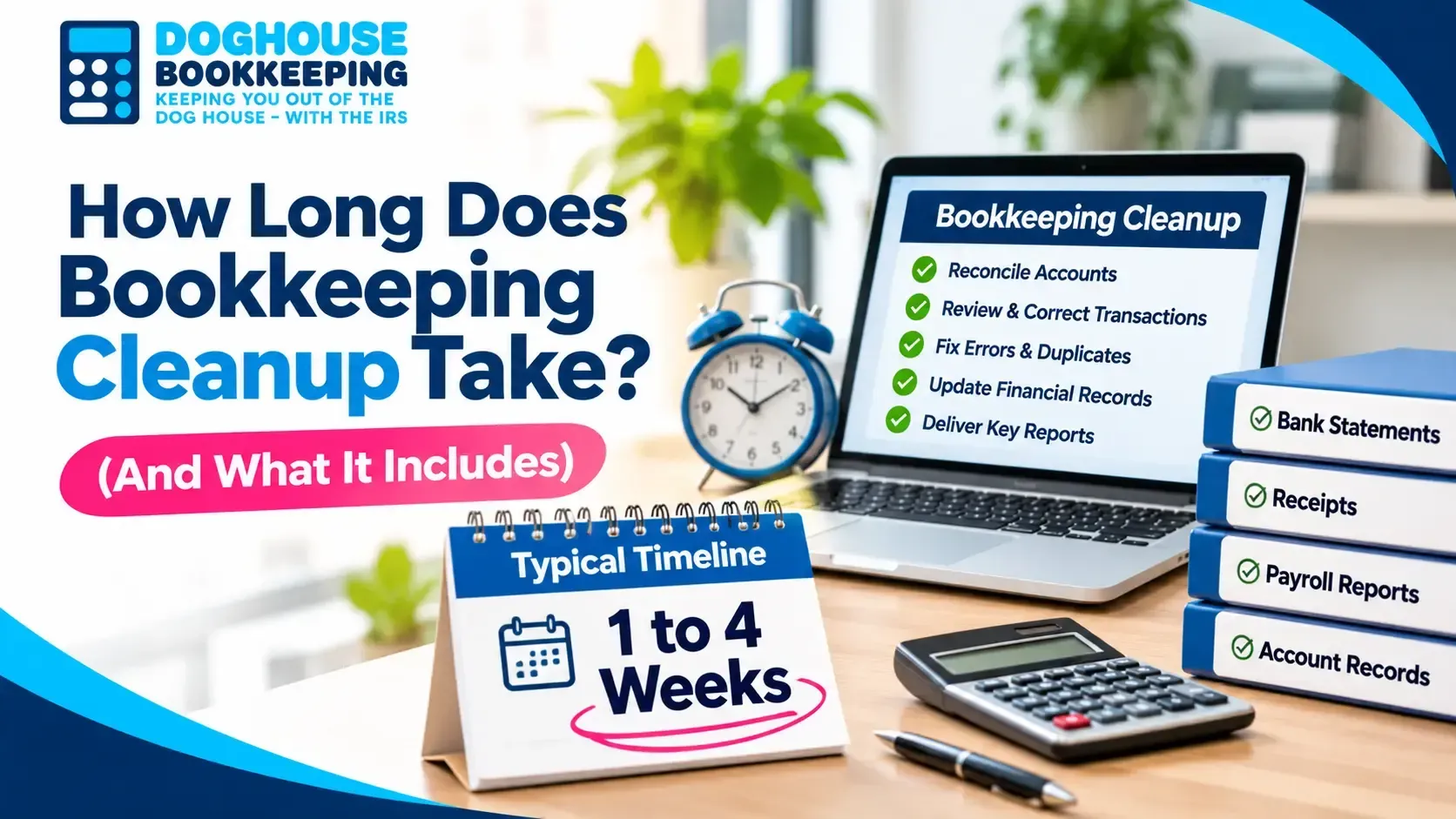
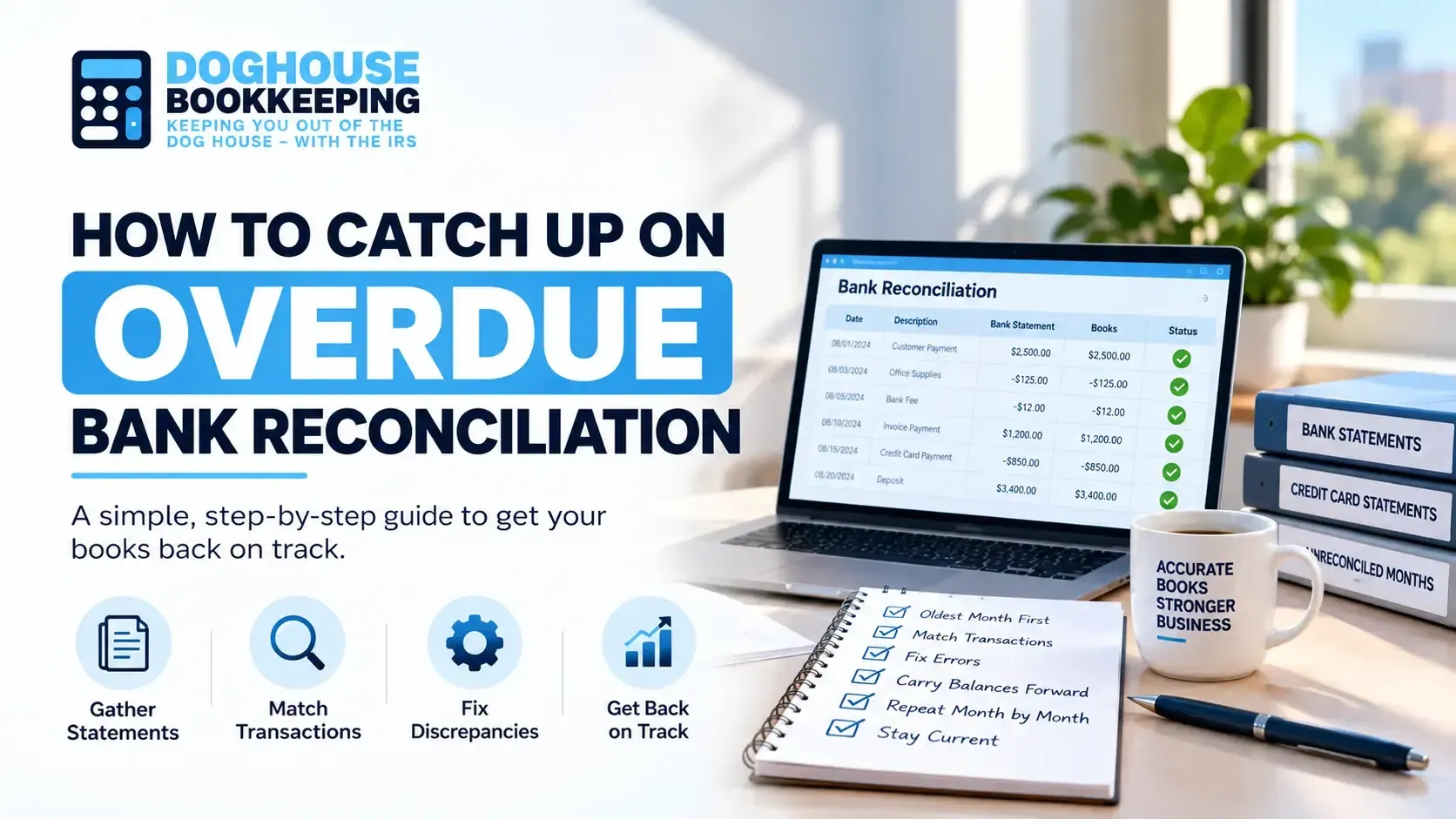
If your books are already months behind, the first step is usually to catch up on overdue bank reconciliation, working from the oldest month forward.
You probably need an accountant first if:
- Your books are accurate and current, and you need tax filing or planning
- You're deciding on an entity structure or major financial move
- You have very few transactions and mainly need a yearly tax return
Many growing businesses need both, with the bookkeeper handling the monthly work and the accountant stepping in for taxes and strategy.
Why Clean Books Come Before Everything Else
An accountant is only as useful as the records they receive. When books are incomplete, an accountant often has to spend billable time sorting out missing transactions, unreconciled accounts, and miscategorized expenses before they can do the work you hired them for. Clean, reconciled books let them go straight to tax planning and advice.
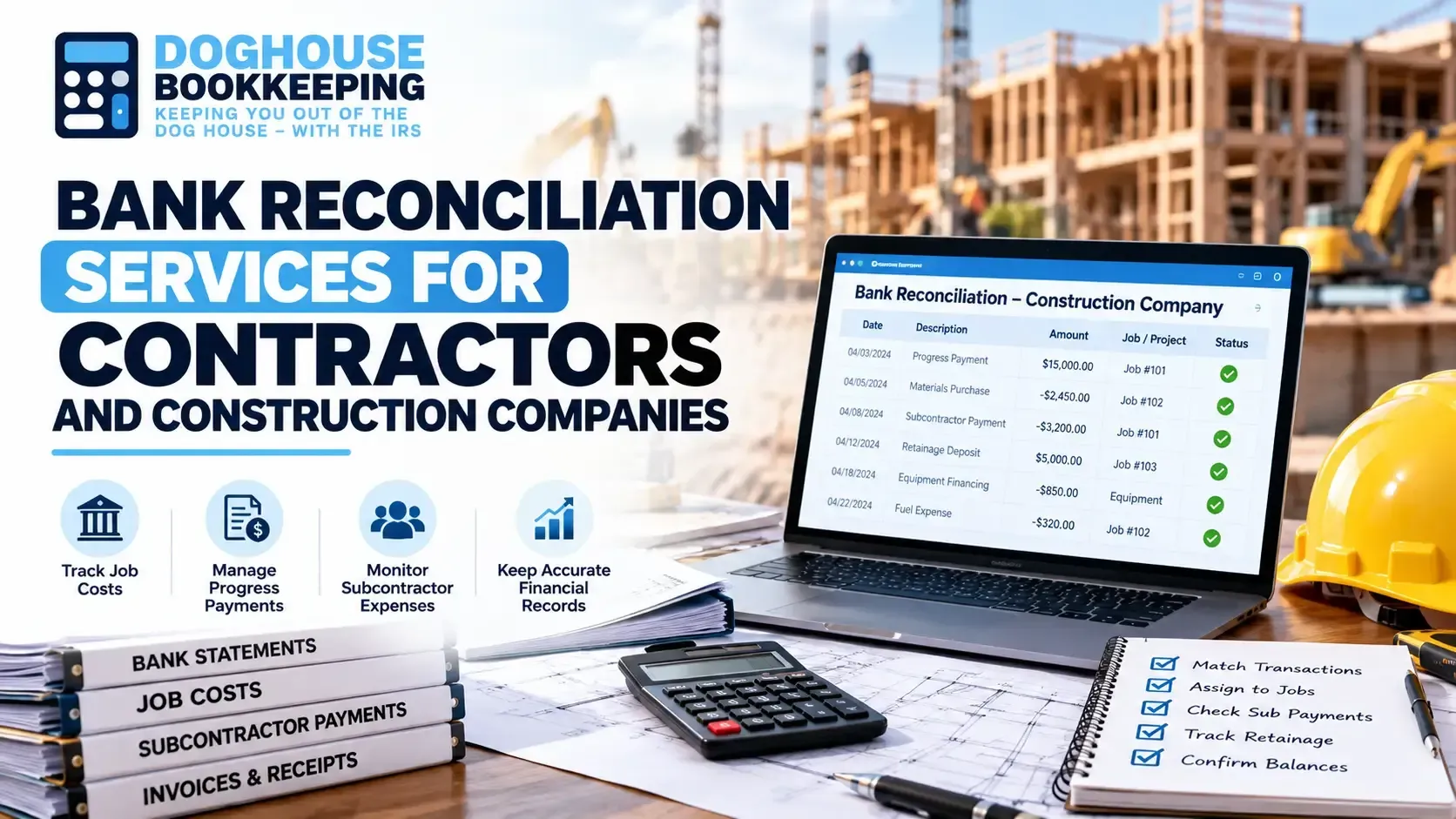
This matters even more in industries with complicated cash flow. A construction company, for example, needs job-level tracking that a generic year-end review won't catch, which is why bank reconciliation for contractors is handled differently than a simple checking account.
How a Bookkeeper and an Accountant Work Together
The best setups treat the two roles as a relay, not a competition. Across a typical year, it looks like this:
- Monthly - the bookkeeper records transactions, reconciles every account, and delivers financial reports
- Quarterly - those reports give you and your accountant an accurate picture for estimated tax payments and mid-year planning.
- Year-end - the bookkeeper closes out the year and hands clean, reconciled books to the accountant for tax preparation
- As needed - the accountant advises on bigger decisions, such as hiring, equipment purchases, or entity changes, using the numbers the bookkeeper maintains
For example, a small business owner might have a bookkeeper categorize monthly transactions, reconcile bank accounts, and prepare financial reports. At tax time, the accountant can use those organized records to prepare the tax return and identify potential tax-planning opportunities.
What This Looks Like for California Businesses
California small businesses face payroll rules and sales tax reporting that make accurate records more important than in many other states. Reconciled books make it far easier to answer a state inquiry or prove payroll and sales tax figures. For California businesses, accurate bookkeeping can help maintain organized records for tax reporting, payroll reviews, sales tax obligations, and financial decision-making. Regular reconciliation also makes it easier to investigate discrepancies and support reported financial figures.
For businesses across Riverside, Corona, and Moreno Valley, a practical approach is to have a bookkeeper maintain accurate records throughout the year while an accountant handles tax preparation and financial planning as needed.
Frequently Asked Questions
Can a bookkeeper do my taxes?
Some bookkeepers may also offer tax preparation if they have the appropriate qualifications and authorization. However, bookkeeping and tax preparation are different services. Bookkeepers generally maintain the financial records that tax professionals use to prepare accurate tax returns. Good bookkeeping can make the tax preparation process more organized and efficient.
Do I need both a bookkeeper and an accountant?
Most growing businesses benefit from both. The bookkeeper keeps your books accurate all year, and the accountant uses them for tax filing and planning. If you're very small, you may start with just one and add the other as you grow.
Is a bookkeeper cheaper than an accountant?
They're priced differently rather than on one scale. Bookkeeping is usually a monthly service based on transaction volume and complexity, while accountants often charge by project, hourly, or an annual fee. Because messy books can increase an accountant's time, good bookkeeping often reduces total cost.
What's the difference between an accountant and a CPA?
A CPA is an accountant who has passed the CPA exam and holds a state license. CPAs can perform audits and certain attest services that other accountants can't. Not every accountant is a CPA.
When should I hire a bookkeeper?
As soon as your transaction volume makes it hard to keep records accurate on your own, or whenever your books fall behind. Hiring before problems pile up is much easier than fixing them later.
Start With Books You Can Trust
Whether you end up with a bookkeeper, an accountant, or both, everything starts with accurate records. Without them, tax filing, financial reports, and business decisions all rest on numbers you can't fully trust.
Dog House Bookkeeping provides monthly bookkeeping and reconciliation for small businesses throughout Riverside, Corona, Moreno Valley, and the greater Inland Empire. Our certified, experienced team works in the software you already use and explains everything in plain language. We prepare the clean records your accountant needs, so tax time is a review instead of a rescue.
Schedule a free consultation and find out exactly where your books stand today.